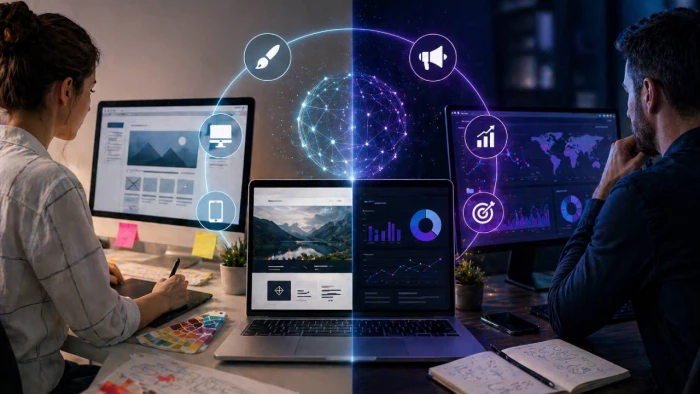
In today’s competitive digital landscape, having an online presence is no longer enough. Businesses must ensure that their websites not only attract visitors but also convert them into customers. This is where the combination of web design and digital marketing becomes essential.
While web design focuses on creating visually appealing and user-friendly websites, digital marketing drives traffic and engagement. Together, they form the foundation of a successful online strategy. Without one, the other cannot reach its full potential.
A website is often the first interaction a potential customer has with a business. Within seconds, users form opinions based on how a site looks and functions. A poorly designed website can lead to high bounce rates and lost opportunities.
Effective web design goes beyond aesthetics. It includes intuitive navigation, fast loading times, mobile responsiveness, and clear calls to action. These elements ensure that visitors can easily find what they are looking for and take the next step, whether it’s making a purchase or contacting the business. A strong design builds trust and credibility, which are crucial for encouraging conversions.
Even the most beautifully designed website will not generate results without traffic. Digital marketing plays a key role in bringing the right audience to a website. Through strategies such as search engine optimization (SEO), pay-per-click advertising (PPC), social media marketing, and content creation, businesses can reach potential customers at different stages of the buying journey.
The goal is not just to increase traffic but to attract qualified leads—people who are more likely to convert. When done effectively, digital marketing ensures a steady flow of visitors interested in the products or services offered.
Web design and digital marketing are most effective when they work together. A well-designed website enhances the impact of marketing efforts, while marketing strategies guide users toward conversion. For example, an SEO campaign may bring users to a landing page, but if that page is not optimized for user experience, visitors may leave without taking action. Similarly, a visually appealing site without proper marketing will struggle to gain visibility.
Bizango understands this connection and focuses on integrating design and marketing strategies to deliver measurable results. Rather than treating design and marketing as separate services, they approach them as part of a unified system—where every design element supports a marketing goal, and every marketing effort leads users into a carefully structured experience.
This includes optimizing landing pages for conversions, ensuring messaging aligns with user intent, and continuously using analytics to refine both design and marketing performance. By combining creative design with data-driven insights, such agencies help businesses reduce friction in the customer journey, improve engagement, and increase conversion rates. By aligning user experience with strategic marketing execution, businesses can create a seamless journey from discovery to conversion—one that not only attracts visitors but also turns them into loyal customers.
Conversion rate optimization (CRO) is where web design and digital marketing truly intersect. A well-designed website ensures a smooth, engaging experience for visitors, while marketing insights help identify what drives user behavior.
Elements such as clear messaging, compelling visuals, and strategically placed calls to action can significantly improve conversion rates. Data from marketing campaigns can be used to refine these elements and continuously improve performance. By combining design and marketing efforts, businesses can convert more visitors into customers, maximizing their return on investment.
Consistency is key to building a strong brand. Web design and digital marketing must work together to deliver a unified message across all platforms. From the website layout and color scheme to social media content and advertising campaigns, every touchpoint should reflect the same brand identity. This consistency helps build recognition and trust among customers.
When users encounter a cohesive brand experience, they are more likely to engage and remain loyal over time.
Adapting to Changing Consumer Behavior
Consumer behavior is constantly evolving, driven by new technologies and changing expectations. Businesses must be able to adapt quickly to stay relevant. Web design ensures that websites are optimized for new devices and user preferences, while digital marketing helps businesses stay connected with their audience through the right channels.
For instance, mobile-first design and personalized marketing campaigns have become essential in today’s environment. By combining these approaches, businesses can remain competitive and responsive to market trends.
The ultimate goal of combining web design and digital marketing is sustainable growth. A well-designed website provides a strong foundation, while effective marketing strategies ensure continuous visibility and engagement. Over time, businesses can build a loyal customer base, improve brand authority, and increase revenue. The integration of these two elements creates a cycle where each supports and enhances the other.
Web design and digital marketing are not separate strategies—they are interconnected components of online success. A visually appealing website without traffic will not generate results, and strong marketing without a functional website will fail to convert visitors.
By combining both, businesses can create a powerful online presence that attracts, engages, and converts their target audience. Partnering with experts like Bizango helps companies put this synergy to work, so every part of their digital strategy supports long-term success.
Be the first to post comment!

Why this comparison is differentMost comparisons between Semrush and Ahrefs thro...
Suraj Malik3 weeks ago

The first thing that stands out about Dippy AI is not the anime visuals or the N...
Suraj Malik3 weeks ago
I still remember the first time I installed Remix OS. It didn’t feel like I was...
Sakshi Dhingra1 month ago

Managing remote employees is very different from managing people in an office. W...
Sakshi Dhingra1 month ago
A school gradebook sounds like a simple thing until you watch what happens when...
Sakshi Dhingra1 month ago

The Growing Buzz Around EditPro in the AI Editing SpaceIn 2026, the name “EditPr...
Sakshi Dhingra1 month ago