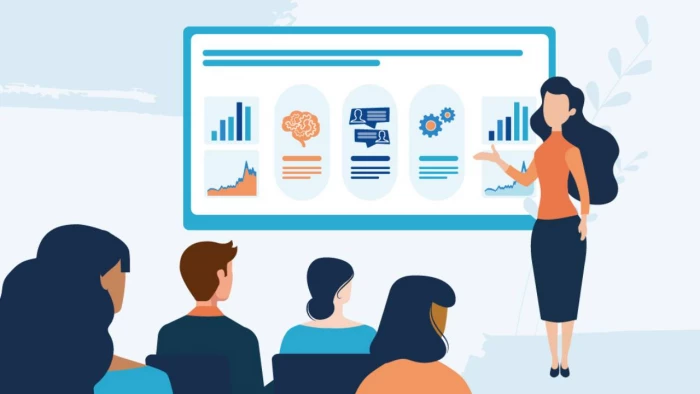
Artificial intelligence will be used in learning in the future. At present, learners use artificial intelligence during daily routines such as assignments, writing, studying, and conducting research. Although AI could prove beneficial from a time-saving perspective and ease of use, there is one major ethical issue that emerges:
Is the usage of AI technology in education ethical?
It should be noted that the utilization of artificial intelligence technologies per se cannot be considered unethical. On the contrary, it is rather beneficial for students to apply them in order to facilitate the educational process. However, improper use of AI is a threat to students' academic success.
This guide aims to provide the reader with essential information concerning the appropriate usage of AI technologies in education.
The use of AI ethically can be defined as the use of AI resources in an ethical manner. You will still do your own learning even when using tools like PowerPoint annotation to better understand and organize information.
An example of the ethical use of AI is when you use AI to learn about something difficult. However, using AI to answer questions and submit them as your own is not ethical.

Students employ the use of artificial intelligence in various contexts. While some use it in a productive way, others may find themselves in risky situations. To illustrate, several students resort to using AI for clarifying complex concepts in simpler terms, while others might use it to brainstorm or proofread their work.
What is more, some students plagiarize an entire answer provided by an AI and submit it as it is without any revisions made.
These tools are efficient, but they may cause issues when utilized incorrectly. Today, most educational institutions are increasingly strict regarding the use of AI by their students and have developed policies accordingly, often relying on an AI detector that teachers use to identify potentially AI-generated work.
In case of unethical utilization of AI tools, there may be:
● Decrease in learning and comprehension
● Disciplinary measures from the educational institution
● Decrease in critical thinking abilities
● Overreliance on technology
However, the appropriate use of AI tools allows for the following advantages:
● Comprehension
● Time saving
● Facilitating the research process
● Development of future skills
Thus, one should aim at the appropriate use of AI tools, rather than avoiding them completely.
This table makes it clear that the problem is not AI itself, but how it is used.
| Ethical Use | Unethical Use |
| Using AI to understand concepts | Copying answers directly |
| Asking for explanations | Submitting AI work as your own |
| Editing and improving your writing | Not reading or understanding content |
| Using AI as a guide | Relying on AI for everything |
In order to maximize the potential of AI, there are a number of things that one needs to consider. To begin with, one should be sure that there is comprehension of what is being written. In cases where AI is used to generate content, it should be edited and rewritten by the writer, which facilitates learning and ensures uniqueness in content.
Secondly, AI should be employed as an assistant rather than a substitute. AI should act as a tutor who guides one through various aspects of their homework, helping them learn the necessary concepts and techniques. Furthermore, AI usage should be transparent, especially where one's institution mandates the reporting of such usage.
Finally, adding personal insights and opinions is key when using AI. While AI will generate factual information, adding one's insights makes the content unique, which is precisely what teachers expect from their students.
These simple habits can help you stay on the right track.
● Always understand the content before submitting it
● Rewrite AI-generated text in your own words
● Do not copy and paste directly
● Add your own examples and ideas
● Follow your school’s AI guidelines
AI can even improve your learning experience when used appropriately. For instance, AI helps in simplifying complicated topics by presenting explanations in simple language. In addition, AI may assist you in getting inspiration when you get stuck in the writing process. The third application of AI in your learning process involves helping you correct any mistakes related to grammar and improving your writing style.
Finally, one important thing about AI usage is that it prepares you for the future. Today, most employment positions require employees to have a basic understanding of AI. Therefore, you should learn how to use AI effectively to prepare yourself adequately.
While the use of AI to help make certain tasks easier is beneficial, misuse may result in potential risks for such technology. One of those risks is the risk of losing our critical thinking skills. You will no longer attempt to address issues independently if you rely heavily on AI.
Other potential dangers include academic risks since many educational institutions employ AI detection software. It may cause punishment if one uses AI to generate work without modification. Other risks include the possibility of acquiring incorrect information from AI.
The best approach to applying AI will be striking a good balance. Such a balance guarantees that AI complements your learning rather than substitutes for it.
AI can help you to:
● Learn about a subject matter
● Create ideas
● Write well
However, you must also:
● Think on your own
● Write your thoughts
● Verify facts
AI is not necessarily an enemy of teachers. Some teachers are aware of the fact that AI is beneficial at times. Teachers' concerns lie more with how much the student is learning.
In case a student gives out impeccable answers yet fails to provide a clear explanation for them, a problem will surely arise. Conversely, where understanding is demonstrated, AI is less of an issue. Instead of attempting to hide the use of AI, it would be prudent to embrace it responsibly.
This example clearly demonstrates that AI is useful when used responsibly. Consider that you have been assigned to write an essay.
AI can help you in:
● Getting topic suggestions
● Comprehending the topic
● Verifying grammar
However, it is not advisable to:
● Copy the essay entirely
● Submit AI-generated text without modification
● Ignore comprehending the topic
AI will definitely play an even greater role in the future. As students develop more tools and use them, schools will be forced to adapt accordingly.
With that in mind, there is a gradual shift in the policies of these institutes. Rather than banning AI, most institutions are now concentrating on educating students about responsible usage. Ethical AI use would be considered an essential skill for the modern age.
AI is a great technology, and its presence will remain forever. Being a student, it is not your aim to shy away from using it but rather to leverage AI ethically. By doing so, AI can enhance your learning process and equip you with new skills and knowledge that can assist you later.
On the contrary, over-reliance on AI technology can be a cause for numerous problems with your learning experience. The thing is that no matter how advanced AI technology can be, it will never be able to take the place of your own comprehension skills.
Is using AI for homework cheating?
No, it depends on the manner of use. As long as you grasp the content and rephrase it, then it is okay. Direct copying will be considered cheating.
Can teachers detect AI-written work?
Yes, most educators employ AI detection software; however, the detection software is not always reliable.
Should I mention AI in my assignments?
Yes, if your institution mandates it.
Can AI help me learn better?
Yes, but only when you leverage it to enhance your comprehension of the topic.
What happens if I misuse AI?
Academic sanctions could ensue, and worse, you would miss out on developing critical abilities.
Should I stop using AI completely?
Absolutely not; just utilize it as a learning tool to gain knowledge.
Share your thoughts about this article.
Be the first to post a comment!

The best AI image generator in 2026 is Nano Banana 2 for speed, FLUX.2 for photo...
Techie Frog2 days ago
It has always been a tale of the "good guys vs. the "bad guys. Whenever security...
Techie Frog2 months ago
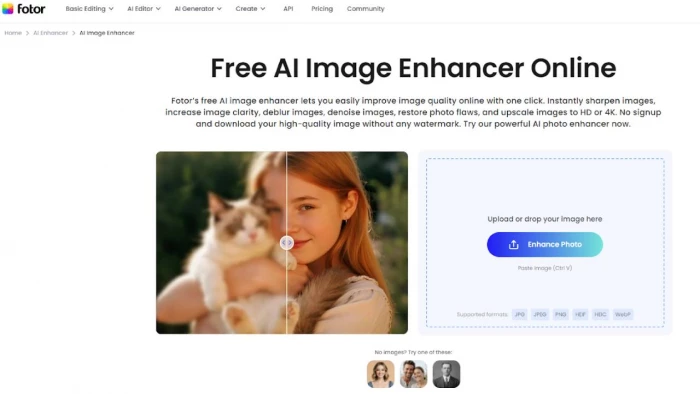
Photos in the modern digital age have become a very important aspect in communic...
Kruzel7 months ago
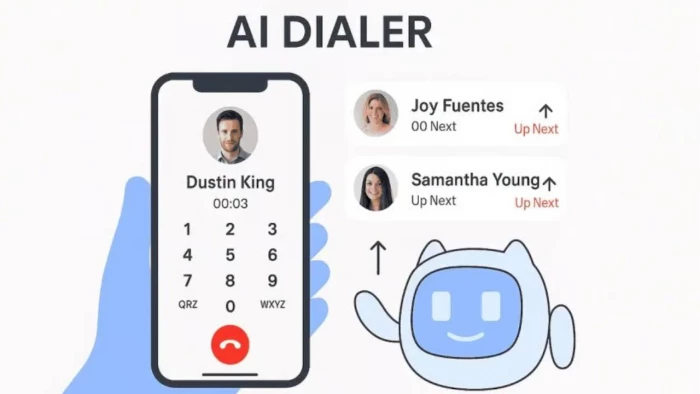
Have you ever had to call a bunch of people and say the same thing over and over...
Kruzel9 months ago
In a world dominated by digital imagery, old photographs often hold a sentimenta...
Terri Cruz1 year ago
As businesses scale, so do their customer service demands—and traditional suppor...
Kruzel1 year ago