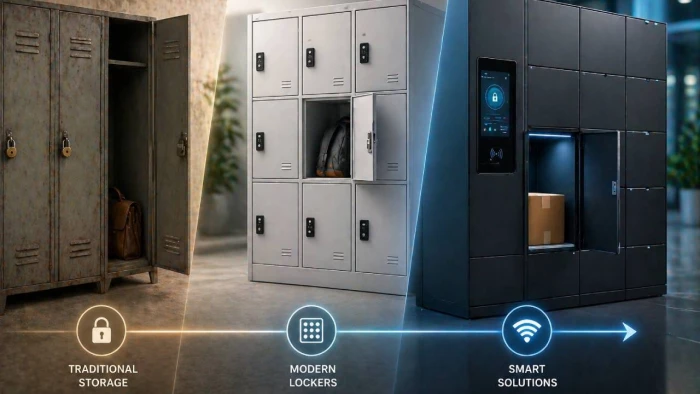
Locker manufacturing has come a long way from simple metal compartments used in schools and gyms. What started as a basic storage solution has become a sophisticated industry driven by innovation, customization, and technology. Today’s lockers are not only designed for durability but also for convenience, security, and integration with modern systems.
As industries continue to modernize, locker manufacturers are adapting to meet changing demands, transforming traditional storage into smart, efficient solutions.
In its early stages, locker manufacturing focused primarily on functionality. Lockers were built from heavy-duty materials like steel and designed to withstand daily wear and tear in high-traffic environments such as schools, factories, and fitness centers.
The primary goal was simple: provide secure, individual storage spaces. Design and aesthetics were secondary considerations, and customization options were limited. Most lockers followed standard sizes and configurations, with minimal variation.
Despite their simplicity, these traditional lockers laid the foundation for the industry. Their durability and reliability made them a staple across multiple sectors.
As businesses and institutions placed greater emphasis on user experience, demand for more customized locker solutions increased. Organizations wanted lockers that aligned with their branding, space requirements, and specific use cases.
Manufacturers responded by introducing a wider range of materials, colors, and configurations. Lockers were no longer just functional—they became part of a facility's overall design.
Jorgenson Lockers exemplify this shift by offering solutions that combine durability with tailored design options. By focusing on both performance and presentation, such manufacturers have helped redefine what customers expect from modern storage systems.
Customization also extended to functionality, with features such as ventilation systems, specialized compartments, and enhanced locking mechanisms becoming more common.
Innovation in materials has played a significant role in the evolution of locker manufacturing. While steel remains widely used, manufacturers are now incorporating materials such as high-density polyethylene (HDPE), laminate, and mesh to meet diverse needs.
These materials offer resistance to moisture, corrosion, and impact, making them ideal for environments such as swimming pools, outdoor facilities, and industrial settings.
The focus has shifted from simply building strong lockers to creating solutions that perform well in specific conditions. This adaptability has allowed locker manufacturers to expand into new markets and applications.
One of the most significant developments in the industry is the introduction of smart lockers. These systems integrate digital technology to provide enhanced security, accessibility, and convenience.
Smart lockers can include features such as:
These innovations are particularly valuable in sectors such as logistics, e-commerce, and corporate offices, where efficiency and security are critical.
Smart lockers are also becoming increasingly popular in public spaces, enabling contactless delivery and secure package storage.
Modern lockers are no longer standalone units—they are part of larger digital ecosystems. Businesses are integrating locker systems with inventory management, employee access systems, and customer service platforms.
This integration enables better data tracking, improved security, and enhanced user experience. For example, companies can monitor locker usage, manage access remotely, and optimize space utilization based on real-time data.
As digital transformation continues across industries, locker manufacturers are focusing on creating solutions that seamlessly connect with existing systems.
Sustainability has become a key consideration in locker manufacturing. Businesses and institutions are increasingly seeking environmentally responsible solutions to reduce their carbon footprint.
Manufacturers are responding by using recyclable materials, energy-efficient production processes, and long-lasting designs that minimize waste. Durable lockers that require less frequent replacement contribute to overall sustainability goals.
This shift not only benefits the environment but also aligns with the values of modern consumers and organizations.
The future of locker manufacturing lies in continued innovation and adaptability. As technology advances, lockers will become even more integrated, intelligent, and user-focused.
Emerging trends may include:
Manufacturers that embrace these trends will be well-positioned to lead the industry forward.
The evolution of locker manufacturing reflects broader changes in technology, design, and user expectations. From basic metal storage units to advanced smart systems, lockers have transformed into essential components of modern infrastructure.
Companies like Jorgenson Lockers highlight how the industry has adapted by combining traditional reliability with modern innovation. As demand for smarter, more efficient solutions continues to grow, locker manufacturers will play a crucial role in shaping the future of storage.
Be the first to post comment!

Why this comparison is differentMost comparisons between Semrush and Ahrefs thro...
Suraj Malik3 weeks ago

The first thing that stands out about Dippy AI is not the anime visuals or the N...
Suraj Malik3 weeks ago

I still remember the first time I installed Remix OS. It didn’t feel like I was...
Sakshi Dhingra1 month ago
Managing remote employees is very different from managing people in an office. W...
Sakshi Dhingra1 month ago

A school gradebook sounds like a simple thing until you watch what happens when...
Sakshi Dhingra1 month ago

The Growing Buzz Around EditPro in the AI Editing SpaceIn 2026, the name “EditPr...
Sakshi Dhingra1 month ago