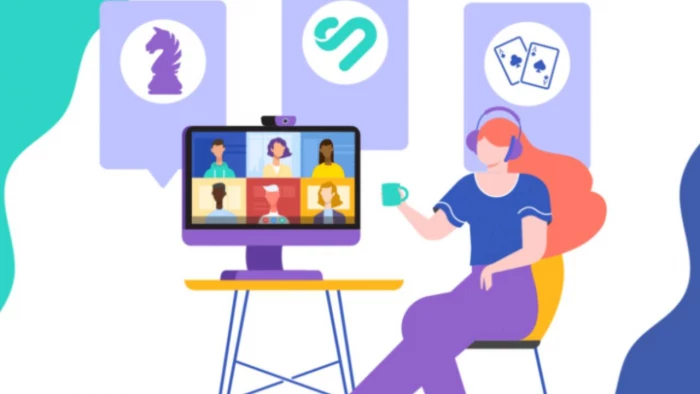
Modern teams spend most of the day inside dashboards, docs and communication tools. Attention hops from calls to emails to slide decks, and even highly motivated people feel the mental drag of back-to-back digital tasks. Long breaks are rare, yet the brain still needs recovery. Short, structured micro-activities are starting to fill that gap, giving professionals a way to reset without destroying momentum or falling into endless scrolling that drains energy instead of restoring it.
In many companies, “taking a break” still means opening social media or getting lost in notification loops that leave people more scattered than before. Teams keep working longer, but output quality quietly slips as cognitive fatigue builds. High-performing firms are shifting away from this pattern, building cultures where short, clearly framed mental resets are part of the workflow rather than an escape from it. These resets respect the reality of packed calendars while acknowledging that sustained focus requires deliberate pauses.
Leaders exploring lightweight, browser-based experiences as part of this reset strategy often start here, weaving quick game rounds into the rhythm of deep work blocks, stand-ups and review cycles. When the activity is designed to last a minute or two and end cleanly, it behaves less like a detour and more like a pressure valve. People step out of a complex task, complete something simple and closed, then come back with fresher attention and lower stress without leaving the digital environment entirely.
Creative, strategy and product teams carry heavy cognitive loads. They move between research, ideation, decision documents and stakeholder feedback, often under tight timelines. Traditional advice still tells them to “step away from the screen,” yet many roles make that unrealistic during peak hours. A structured micro-break that fits inside the same device solves this tension. It gives the brain novelty and a sense of completion while keeping tools, files and chats only one click away when it is time to resume.
For founders and managers building knowledge-driven firms, this matters as much as any new framework or tool. A team that knows how to protect its attention can review data more accurately, make better calls on priorities, and sustain quality through the end of the quarter. Short play sessions become part of that hygiene – small but repeated behaviors that prevent fatigue from becoming baked into the culture.
The most effective implementations treat micro-games as another layer in the workflow, not a toy sitting off to the side. They appear at natural inflection points – after shipping a sprint, before a planning meeting, or between two heavy research blocks – and they are clearly framed as short, optional resets. People are not nudged toward them in the middle of critical tasks, and there is no confusion between “on” time and “off” time.
Teams that use game-style breaks successfully tend to follow a few simple ground rules that keep things productive:
These constraints might look strict, yet they are exactly what protects focus. The goal is never to keep people “hooked” but to let them breathe, then slide back into meaningful work with a clearer head.
For business leaders, every new practice eventually faces the same question – does this help performance. While micro-play is not a replacement for sound strategy or strong execution, it supports both by stabilizing attention. Teams that integrate short resets often report fewer sloppy errors in repetitive tasks, better energy late in the day, and more constructive participation in meetings that follow intense focus blocks.
There is also a cultural effect. When people see that leadership explicitly allows – and even designs for – small recovery windows, pressure to appear “always on” starts to ease. That shift encourages more honest communication about workload, which in turn makes it easier to allocate resources realistically. Micro-games sit quietly inside that environment as one of several tools that help people operate at a high level without sliding into burnout.
Ambitious companies talk a lot about growth, innovation and resilience, yet the everyday experience of their teams often comes down to how attention is managed between 9 and 6. A break culture built on random distractions works against those goals. One built on short, intentional resets aligns with them. Quick game rounds, framed correctly, become part of that system – reliable, time-bounded moments that keep minds sharp without pulling anyone out of the workday for long stretches.
Be the first to post comment!
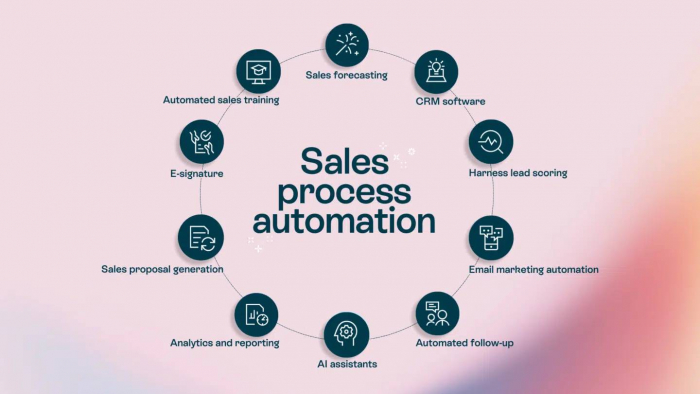
Introduction: Why Sales Automation Is No Longer OptionalToday’s B2B sales enviro...
Michael Hicklen2 months ago

Image search has quietly become one of the most powerful discovery, research, an...
Michael Hicklen2 months ago
Why Workflow Automation Matters in 2026Automation tools help businesses:● S...
Michael Hicklen2 months ago

1) Foundations :What software review platforms are-Software review platforms are...
Michael Hicklen2 months ago
1. What AI Automation in Daily Work Actually Means?1.1 AI automation in daily wo...
Michael Hicklen2 months ago
1. What Is a CRM?Definition-A CRM (Customer Relationship Management) system...
Michael Hicklen2 months ago